
Deck Glossary
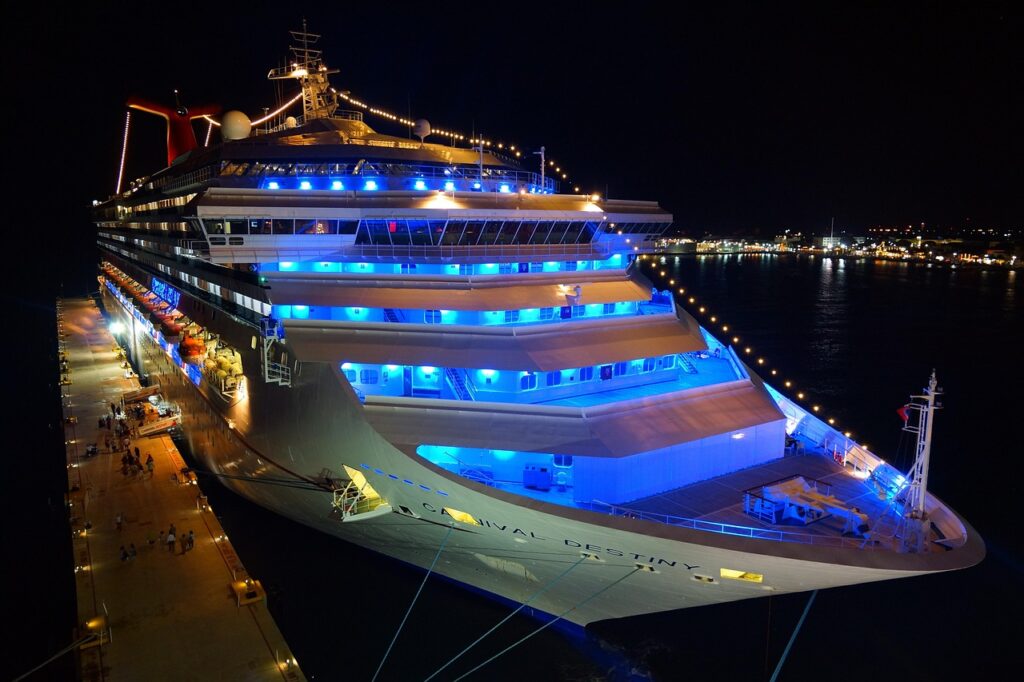
1.Abandon vessel—-To evacuate a vessel from crew and passengers following a distress
2.Assembly station—-Place on deck, in mess rooms, etc., assigned to crew and passengers where they have to meet according to the muster list when the corresponding alarm is released or announcement made.
3.Blast—-A sound signal made with the whistle of the vessel
4.Boarding arrangements—-All gear, such as pilot ladder, accommodation ladder, hoist,etc., necessary for a safe transfer of the pilot
5. Bridge—-The place where the ship is driven, usually located on the bow on passenger ships
6.Casualty—-Case of death or serious injury to a person in an accident or shipping disaster, also said of a distressed vessel
7. Disembark (to)—-To go from board a vessel
8. Distress alert (GMDSS)—-A radio signal from a distressed vessel automatically directed to a RCC giving position, identification, course and speed of the vessel as well as the nature of distress
9. Dragging (of anchor)—-Moving of an anchor over the sea bottom involuntarily because it is no longer preventing the movement of the vessel
10. Dredging (of anchor)—-Moving of an anchor over the sea bottom to control the movement of the vessel
11. Embark (to)—-To go aboard a vessel
12. Escape route—-A clearly marked way in the vessel which has to be followed in case of an emergency
13. ETA—-Estimated time of arrival
14. ETD—-Estimated time of departure
15. Fire party—-A group of crew members trained for fire fighting on board
16.Fire patrol—-A round through the vessel carried out by a crew member of the watch at certain intervals so that an outbreak of fire may be promptly detected; mandatory in vessels carrying more than 36 passengers
17. Flooding—-Major flow of seawater into the vessel
18. Foul (of anchor)—-Anchor has its own cable twisted around it or has fouled an obstruction
18. Foul (of propeller)—-A line, wire, net, etc., is wound round the propeller
19. Full speed—-Highest possible speed of a vessel
20. General emergency alarm—-A sound signal of seven short blasts and one long blast given with the vessel´s sound system
21. GMDSS—-Global maritime distress and safety system
22. GPS—-Global (satellite) positioning system
23. Hatchrails—-Ropes supported by stanchions around an open hatch to prevent persons from falling into a hold
24. Hoist—-here: A cable used by helicopters for lifting or lowering persons in a pick-up operation
25. Initial course—-Course directed by the OSC or CSS to be steered at the beginning of a search
26. Launch (to)—-To lower, e.g. lifeboats to the water
27. Let go (to)—-To set free, let loose, or cast off (of anchors, lines, etc.)
28. Lifeboat station—-Place assigned to crew and passengers where they have to meet before they will be ordered to enter the lifeboats
29. Moor (to)—-To secure a vessel in a particular place by means of chains or ropes made fast to the shore, to anchors, or to anchored mooring buoys, or to ride with both anchors down
30. Muster (to)—-To assemble crew, passengers or both in a special place for purposes of checking
31. PA-system—-Public address system: Loudspeakers in the vessel´s cabins, mess rooms, etc., and on deck via which important information can be broadcast from a central point, mostly from the navigation bridge
32. Rescue team—-A group of crew members standing by in case of an emergency in order to assist other teams in action if necessary
33. Retreat signal—-Sound, visual or other signal to a team ordering it to return to its base
34. Safety load—-The maximum permissible load of a deck, etc.
35. Safe working pressure—-The maximum permissible pressure in cargo hoses
36. SAR—-Search and rescue
37. Stand by (to)—-To be in readiness or prepared to execute an order
38. Stand clear (to)—-To keep a boat away from the vessel
39. Stand on (to)—-To maintain course and speed
ORDER MEANING
Midships—-Rudder to be held in the fore and aft position.
Port five—-5° of port rudder to be held.
Port ten—-10° of port rudder to be held.
Port fifteen—-15° of port rudder to be held.
Port twenty—-20° of port rudder to be held.
Port twenty-five—-25° of port rudder to be held.
Hard -a-port—-Rudder to be held fully over to port.
Starboard five—-5° of starboard rudder to be held.
Starboard ten—-10° of starboard rudder to be held.
Starboard fifteen—-15° of starboard rudder to be held.
Starboard twenty—-20° of starboard rudder to be held.
Starboard twenty-five—-25° of starboard rudder to be held.
Hard-a- starboard—-Rudder to be held fully over to starboard.
Ease to five—-Reduce amount of rudder to 5° and hold.
Ease to ten—-Reduce mount of rudder to 10° and hold
Ease to fifteen—-Reduce amount of rudder to 15° and hold.
Ease to twenty—-Reduce amount of rudder to 20° and hold.
Steady—-Reduce swing as rapidly as possible.
Steady as she goes—-Steer a steady course on the compass heading indicated at the time of the order. The helmsman is to repeat the order and call out the compass heading on receiving the order. ☆When the ship is steady on that heading, the helmsman is to call out: “Steady on …”
Keep buoy/ mark/ beacon/ … on port side.
Keep buoy/ mark/ beacon/ … on starboard side.
Report if she does not answer wheel.
Finished with wheel.